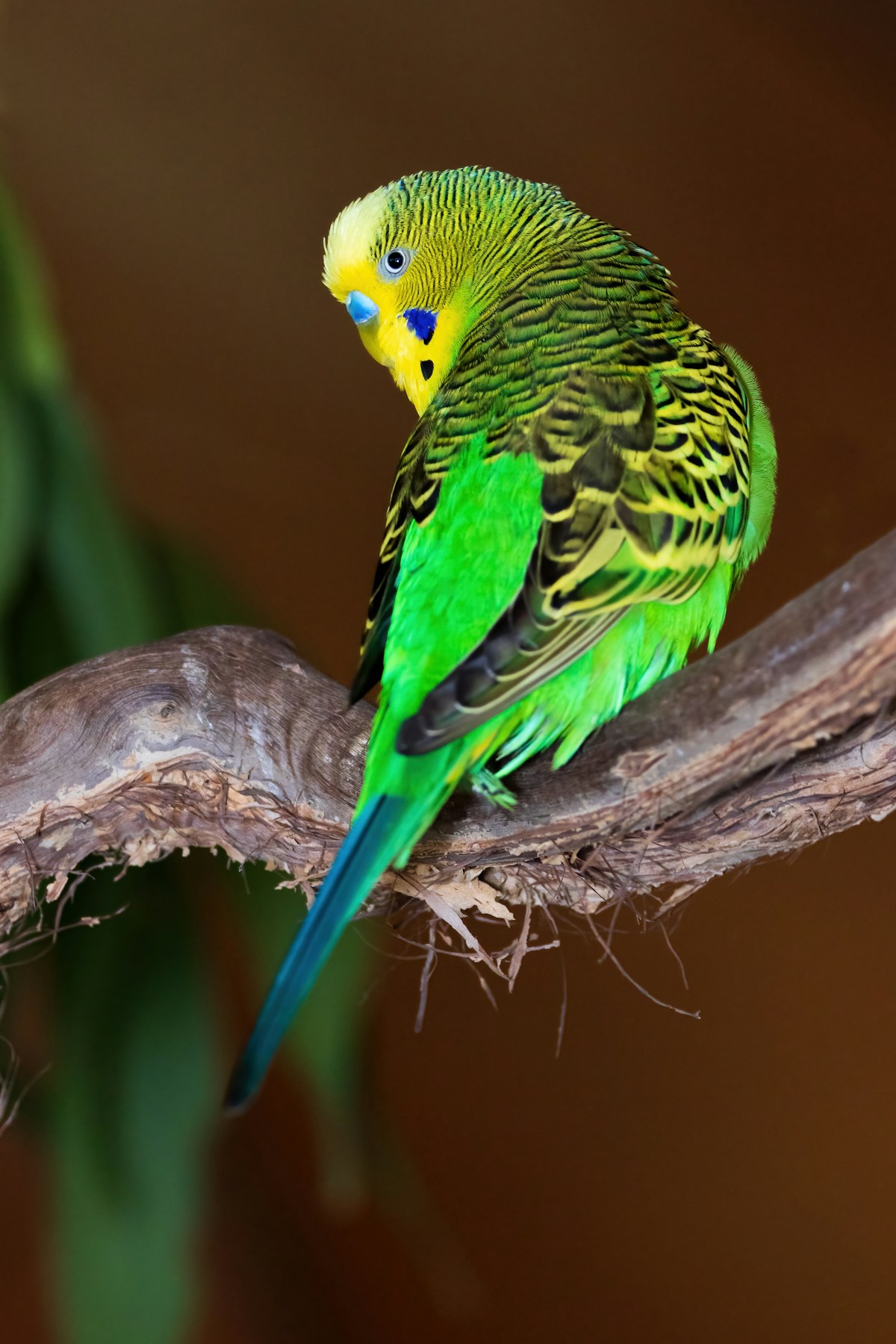
Burlington sits on Lake Ontario, which blunts the worst of the Arctic cold and summer highs but leaves us with four distinct seasons. Small caged birds — budgies, cockatiels, finches, canaries, lovebirds, small conures, doves, parrotlets — do not need fancy equipment to get through any of them. They need four things, one per season. This is the whole guide.
Winter: Dry Air Is the Only Real Problem
From November to March, Burlington furnaces run almost non-stop and pull indoor humidity below 30 percent. That is too dry for a small caged bird. Dry air cracks nasal passages, makes feathers brittle, and triggers more stress-preening than any other winter factor.
The fix is one cheap humidifier in the same room as the cage, running on a low setting to hold the room between 40 and 50 percent. A $15 hygrometer from any hardware store tells you whether you are there. That is the whole winter protocol. You do not need full-spectrum avian lights, you do not need a bird-specific humidifier, you do not need a heated perch. You need a humidifier and a hygrometer. Keep the cage off the cold floor, away from the window glass, and not directly above a heating vent.
Food and water do not change in winter for a small caged bird. Your normal seed or pellet routine is fine. Warm mash and sweet potato are nice but not required. If you notice your bird fluffed up more than usual, check the room thermometer first — cold rooms are the most common cause, and sliding the cage two metres away from the exterior wall fixes it.
Spring: The Windows Are the Problem
March and April in Burlington come with the first warm days, and the instinct is to open windows. Do not open the window in the same room as a small caged bird until you have a screen that actually fits and no gap at the top. Escapes in spring are the single most common way Burlington owners lose a bird, and the bird almost always flies toward the window it has been watching all winter.
Pollen comes in through open windows too. The Royal Botanical Gardens is five minutes from most Burlington neighbourhoods and it pumps out pollen from April through June. If your bird starts sneezing, close the windows in the bird room and open them in a different room instead. A basic HEPA filter on the lowest setting is a nice-to-have, not a must-have.
Hormonal behaviour spikes in spring because of the longer daylight. This is normal. Do not put anything nest-shaped inside the cage — no tents, no huts, no coconut shells. Keep the cage light schedule at 10 to 12 hours of daylight by covering the cage at a fixed evening time. That usually settles most hormonal acting-out within two weeks.
Summer: Your AC or an Open Window — Pick One
Burlington summers hit high twenties and occasionally low thirties Celsius. Small caged birds handle the heat fine up to about 28 degrees Celsius. Above that, they start panting and holding their wings away from their body. That is the line where you need to act.
The easiest summer protocol is air conditioning set to between 22 and 26 degrees Celsius. If you do not have AC, a ceiling fan or floor fan in the same room is acceptable — just point it at a wall, not at the cage, because direct air flow dehydrates a small bird faster than heat does. Shallow water dishes for bathing are good in a heatwave. A light misting from a clean spray bottle is good too. You do not need a specialty bird bath, a dish works.
Do not take a small caged bird outside in summer. This is not a question of stress or experience, it is a predator and escape question. Hawks are regular visitors to every Burlington neighbourhood, and the second a cage door opens or a carrier unlatches outdoors, the bird is gone. If you want your bird to hear birdsong, open the window on the other side of the house and let sound travel.
Fall: Check the Drafts Before the Moult
Most small caged birds moult once a year in fall. Moulting is tiring and they get quiet, fluffy, and slightly grumpy for two to four weeks. This is normal and needs no intervention beyond keeping food and water fresh. If you want, add one hard-boiled egg (white and yolk) twice a week for the protein, but your normal diet is fine on its own.
The one fall task that actually matters in Burlington is draft-checking. Old Burlington housing stock has windows that leak cold air once October arrives, and the cage is often against an outside wall because that is where it fit in the living room. Move the cage two metres in from any exterior wall for the winter. That alone prevents more cold-related stress than any other single action.
That is the whole four-season guide. Humidifier in winter. Closed windows in spring. Cool room in summer. Away-from-the-wall in fall. No expensive gear, no supplements, no special equipment. A small caged bird is not a delicate creature; it just needs you to not create the four problems above.