Pick up the phone and call any Burlington bird boarder that is not us. Ask what it costs to board three budgies in one cage for a week. You will hear something like this: "Forty-five dollars per bird, per night, plus a ten-dollar enrichment fee and a five-dollar photo-update package." Do that math. Forty-five times three is one hundred and thirty-five. Times seven nights is nine hundred and forty-five dollars. Plus the add-ons. For three budgies. For a week.
Now ask us the same question. Three budgies in one cage for a week is fifty dollars. Flat. Whole trip. The same fifty dollars if you extend to ten nights, fourteen nights, or the full three weeks. No add-ons. No photo package. That is a nineteen-times price difference for what is essentially the same service.
This article is the honest answer to two questions we get asked all the time. First: how can your rate be that much lower? Second: why does nobody else price this way? The answer to both is the same thing, and it is not hidden or clever. We changed two things at once — the unit of billing, and the unit of time.
The Industry Standard: Per Bird, Per Night
Almost every pet boarder in Ontario — and almost every bird boarder specifically — charges by the animal and by the night. This is inherited from dog and cat boarding, where every animal genuinely takes individual attention on every individual day: walks, feeding, cleaning, interaction, medical checks. Each dog is a separate unit of work, and each night is a separate unit of time, so each dog-night gets a separate line on the bill.
When bird boarding grew out of the general pet-boarding industry, it inherited the billing model without ever questioning whether it fit. The assumption was: one bird equals one unit of care, one night equals one unit of time, so one bird-night equals one line on the invoice. Nobody stopped to ask whether that actually matched the work.
And for large parrots — macaws, cockatoos, African Greys, large conures — the assumption sort of holds. Those birds need individual handling, individual out-of-cage time, individual cage cleaning, and the labour to do all that really does scale with the number of days you are gone. Per-bird, per-night pricing for a big parrot is not unreasonable.
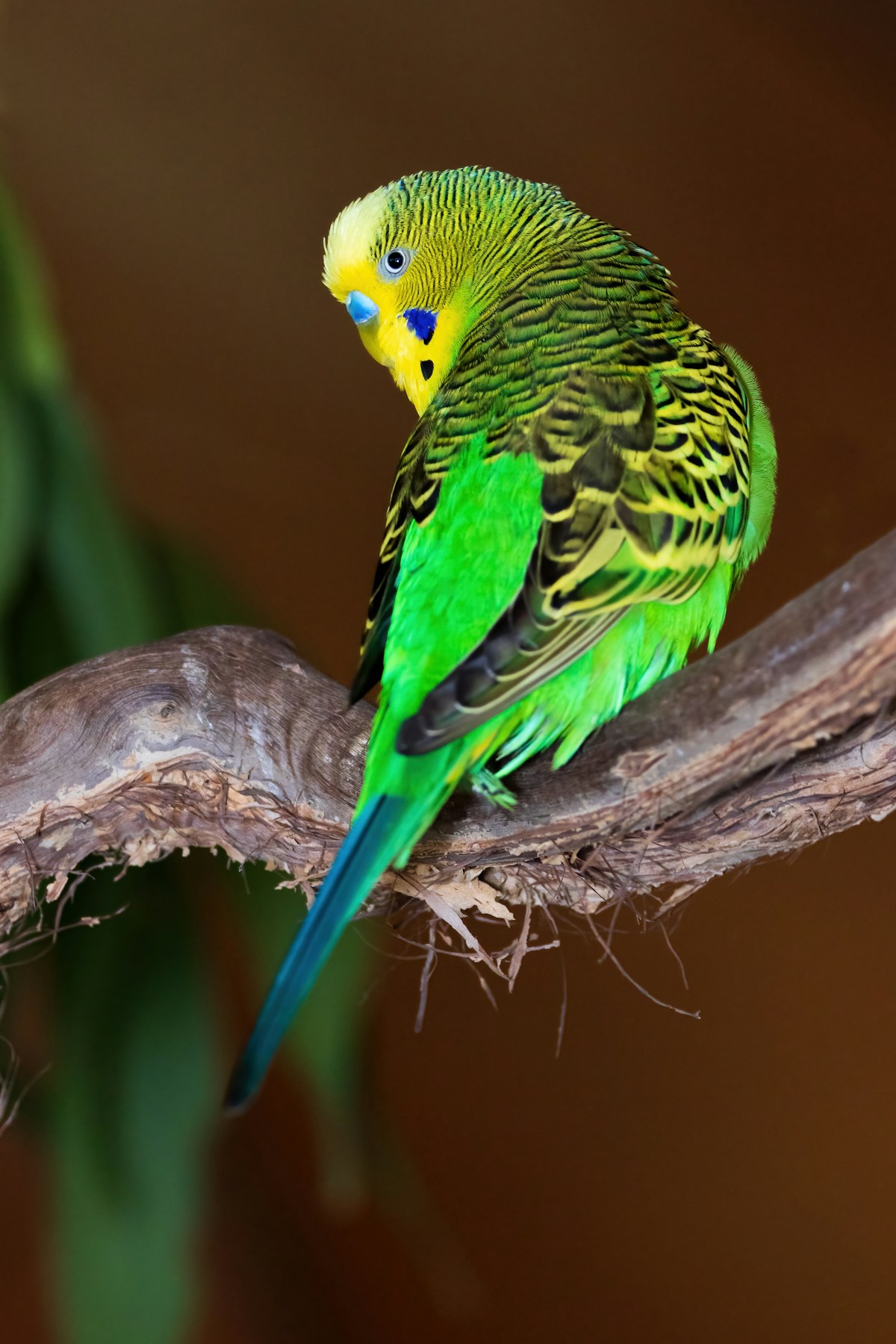
Here is the problem: small caged birds are not big parrots. Three budgies in one cage is one unit of work, not three. And day twelve of a budgie's stay is not more expensive than day three — the routine is identical. The cage is the unit of labour. The trip is the unit of time. Billing each budgie separately and each night separately charges you twenty-one times for a service that is essentially one repeating action.
What the Actual Work Looks Like
Let us walk through the literal daily labour of boarding a small caged bird. In the morning, a staff member enters the room, tops up the food bowl, replaces the water, glances at the bird, and leaves. If there are three birds sharing that cage, the food bowl is a little fuller and the water bowl a little larger, but the staff member still walks in once, performs one refresh action, and walks out. In the evening, the same thing happens again. That is the full daily routine.
The marginal cost of the second bird in a shared cage is effectively zero. The third bird is zero. A fourth bird in the same cage would start stressing the cage, so we draw the line at three. But up to three, the work is identical to boarding one.
So why would we charge you three times for it? Honest answer: we wouldn't. That is why we charge you once.
Why Nobody Else Switched
If per-cage pricing is so obviously correct for small caged birds, why does no other Burlington bird boarder do it? Three reasons, in order of importance.
Reason one: revenue. A boarder that charges per bird collects more money for the same labour. Nobody in a growing business wants to voluntarily lower their revenue. The per-bird model is a profit engine, and once you have priced yourself into that model it is very hard to talk yourself out of it.
Reason two: marketing. "Forty-five dollars per bird per night" sounds like a premium service. "Fifty dollars flat for the whole trip" sounds cheap. For a boarder whose brand is built on being gentle, nature-inspired, and caring, the low flat number feels off-brand. They literally cannot advertise it without breaking their positioning.
Reason three: mixed portfolios. Most bird boarders accept every bird. They take your budgies, and they also take your neighbour's Moluccan cockatoo. Their pricing model has to work for the cockatoo, so the per-bird logic stays. They can't carve out a separate budgie rate without creating a two-tier system that confuses customers and cannibalises their premium business.
We avoided all three of those traps by making one simple decision at the start: we only take small caged birds. No macaws, no cockatoos, no African Greys. That means our pricing model only has to fit one type of bird, and for that type of bird, per-cage pricing is the honest answer.
The Math That Decides Everything
Here is the side-by-side comparison that almost every one of our customers runs through before booking. These are real numbers at real competitor rates in the GTA.
Three budgies, seven-night trip, at a per-bird boarder. $45 per bird per night times three birds times seven nights = $945. Plus an enrichment fee, a photo-update fee, and a holiday surcharge if the trip falls over a long weekend. Realistic total: $1,050 to $1,100.
Three budgies, seven-night trip, at Lakeshore Bird Care. One flat trip fee. Fifty dollars. End of math. Three budgies share one cage. Length of stay doesn't change the price. No add-ons. Total: $50.
You are looking at a $1,000 difference on a one-week trip for the same three birds in the same cage doing the same thing.
Now watch what happens when you extend the trip. A fourteen-night trip at the per-bird boarder doubles to $1,890. At Lakeshore it is still $50. A full twenty-one-night trip at the per-bird boarder is $2,835. At Lakeshore it is still $50. The price does not move until you cross out of the 3-to-21-night window, at which point we fall back to a simple $12-per-cage daily rate for the outlier stays.
Even at one bird, the math still works in your favour. One budgie for seven nights at a per-bird boarder is $315 before add-ons. One budgie for seven nights here is $50. The trip-flat model is cheaper whether you have one bird or three, and it gets dramatically cheaper the longer you are gone.
What You Give Up
The honest part of this conversation is the part where we tell you what you are giving up for the savings. Three things, in order of importance.
You give up out-of-cage time. Your bird stays in its cage for the entire stay. No play gym, no supervised flight, no shoulder time with staff. We do not open the cage door except to replace food and water.
You give up updates. We do not send daily photos. We do not schedule video calls. We do not keep a written care journal. If something goes wrong we message you immediately, and if you want to check in during your trip you can message us through the booking form and get a short plain-text reply. That is the full communication protocol.
You give up the premium experience. No consultation, no pre-stay tour, no handwritten welcome note in your cage. The drop-off is five minutes, the pickup is five minutes, and in between your bird sits in a quiet room getting its food and water refreshed twice a day. That is the service.
For the owner of a small caged bird who wants to take a trip without spending a thousand dollars on boarding, none of those things are deal-breakers. For the owner who wants photo updates and a care journal, they absolutely are — and we recommend a full-service boarder for that owner, sincerely and without judgement. The whole point of having two pricing models in the Burlington market is that bird owners can pick the one that matches what they actually need.
So Why Are We Writing This?
Because if you have been paying three or four hundred dollars to board a budgie, the first time you see our rate you will think it is fake. Our bounce rate on the pricing page tells us that. People visit, read "fifty dollars flat for the whole trip", assume it is a trick or a typo, and leave.
This article exists so that if you are that visitor, you have the full explanation. The rate is not a trick. It is a different billing model for a different type of bird — per cage instead of per bird, and per trip instead of per night. The labour math works. The revenue math works for us because we only take small birds and we run a quiet room with many cages in it. There is no catch. You get what we say you get, and you pay what we say you pay.
If that matches what you want for your bird, request a booking through the form. If it does not, we hope this article at least made the industry pricing landscape make sense.